ADJUSTABLE DRIVER
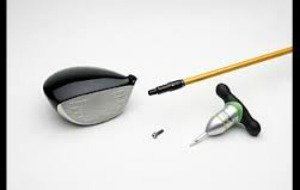
In the past few years all of the O.E.M.s have come out
with their latest marketing ploy to sell more golf drivers. The adjustable driver
with their hosel devices, their sole access locking screws, and
their adjustable sole position pieces, have hit the market with a vengeance,
promising you to get that wrench out and set your clubhead to hundreds of
different specifications. What a farce. Many of the experts in the club
designing business have taken these devices and have measured every combination
possible. Their conclusions: Yes, rotating the shaft changes the specifications,
but nowhere near what they advertise
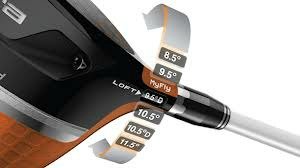
It has been proven that it is simply not possible to
change the loft with an adjustable driver using a hosel device which operates
on the principle of changing the angle of the shaft into the clubhead. When you
turn the shaft with your wrench to any of the loft settings, you are only
changing the static appearance of the clubhead, when you sole the club. As soon
as you swing the club, the manufactured state of the head, in regard to loft, takes
over
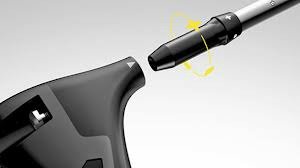
You will change the face angle of the clubhead by manipulating the shaft, and only with some adjustable sole protrusion pieces, will you change the loft angle, but in doing so you change the face angle at the same time. You can definitely change the lie angle and the face angle by changing the angle of the shaft, but you simply cannot change the loft of the clubhead through a change in the angle of the shaft using such an adjustable driver hosel device.
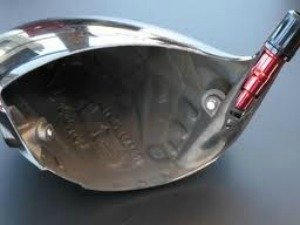
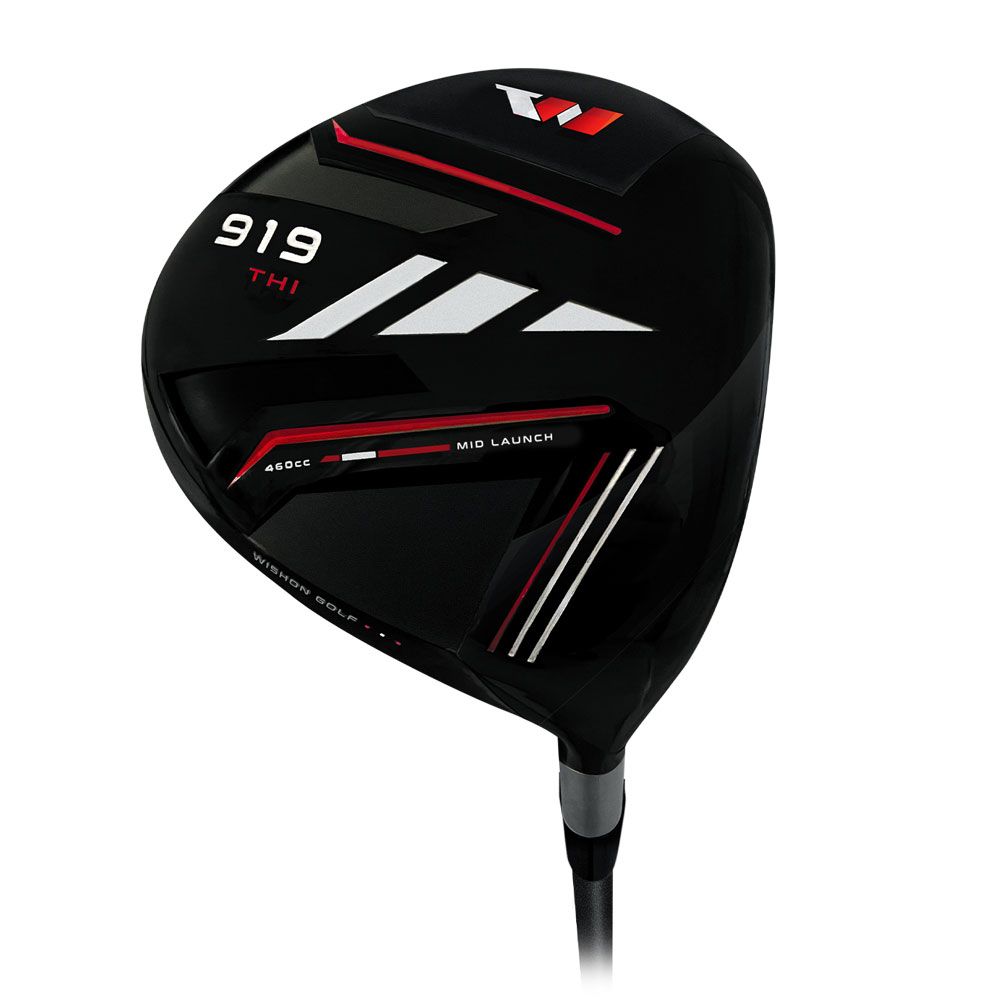
Wow, that’s a lot of negative to that $600 U.S. and $900 Cdn. adjustable driver isn’t it? We will attempt to explain further of what we think of these adjustable drivers that all of the O.E.M.s are marketing. However, in the past few years Tom Wishon has designed his adjustable driver, the 719MW, which is the definitive answer to this category.
WISHON 719MW ADJUSTABLE DRIVER

Four years in the making, the 719MW is the most advanced moveable weight driver ever designed, offering more versatility than any other adjustable driver.
ADJUSTABLE DRIVER WITH FOUR SEPERATE WEIGHT CAVITY POSITIONS
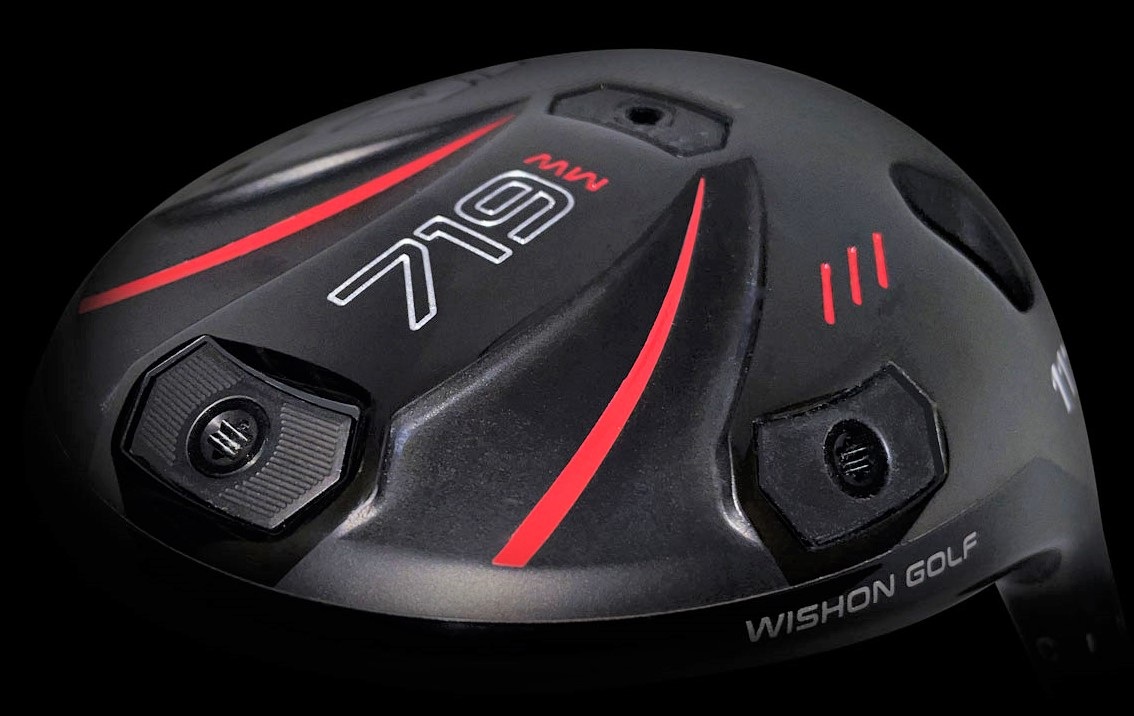
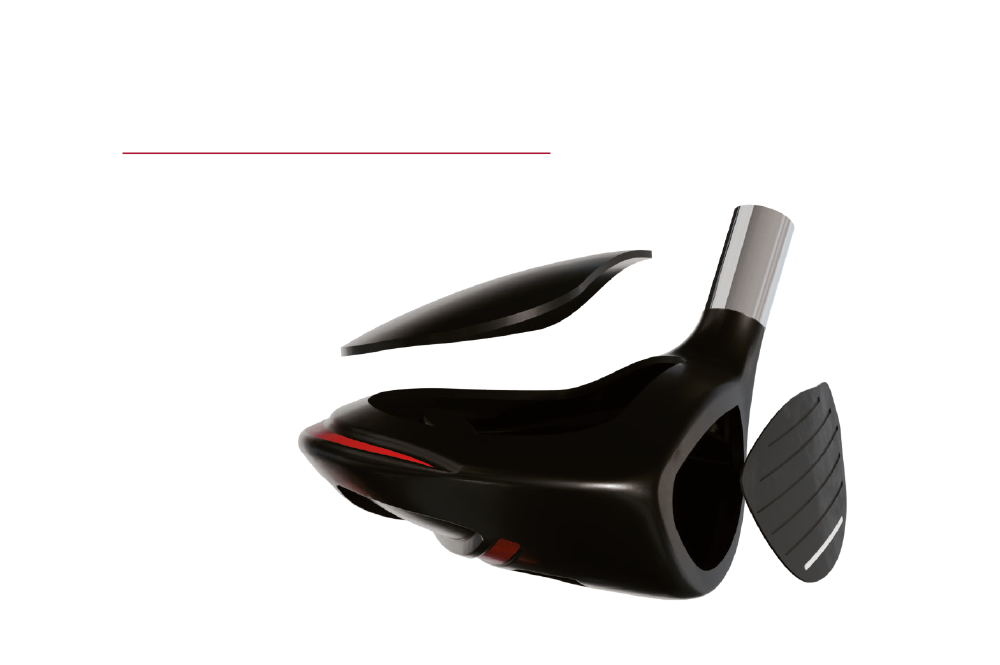
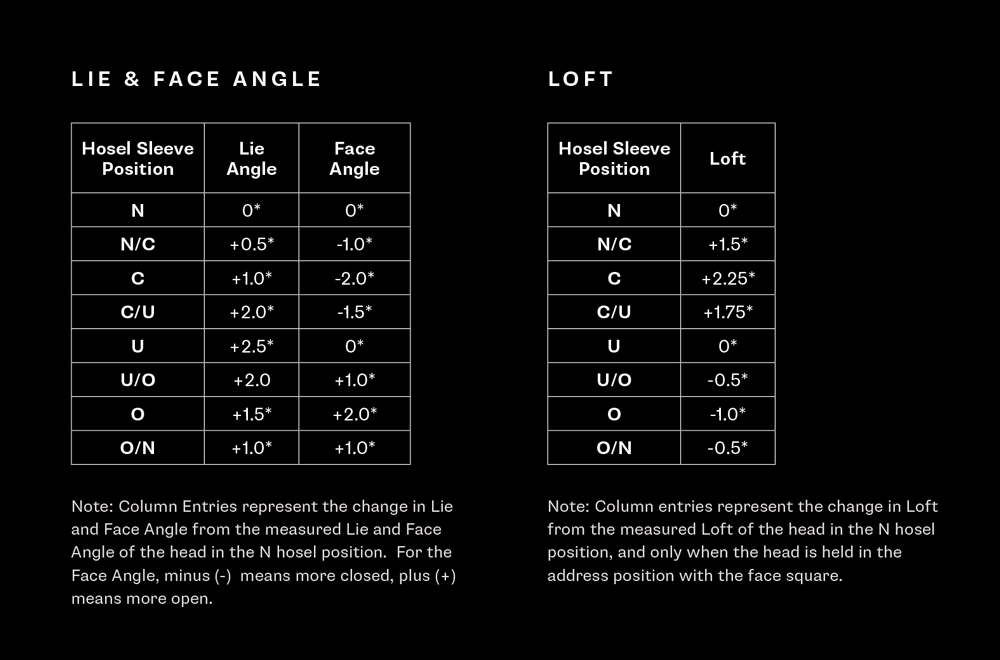
Four separate weight cavity positions on the sole will accept seven different optional weights, whilst the 719MW's custom hosel sleeve offers a wide range in custom lie and face angle specifications. The 719MW hosel sleeve can also be used to offer different lofts when the golfer does not need a custom lie or face angle, only when the adjustable driver is held in the square face position at address.
Seven different weights have been created to fit into any of the four weight cavities on the sole of the 719MW driver. The 2g, 4g, 6g, 8g and 10g weights can be used in any of the sole weight cavities for final swing weighting or final MOI assembly of the driver.
The 20g and 30g weights are offered to change the COG of the head and promote different shot shapes - draw bias (heel-side weight position), fade bias (toe-side weight position), lower flight (front-centre weight position), and higher flight (rear-centre weight position).
20g weight will change shot shape ONLY for golfers with a higher level of centre face impact consistency, and with a clubhead speed over 100mph. The 30g weight will help to change shot shape for golfers with a less consistent center impact tendency, and any golfer with a clubhead speed under 100mph.
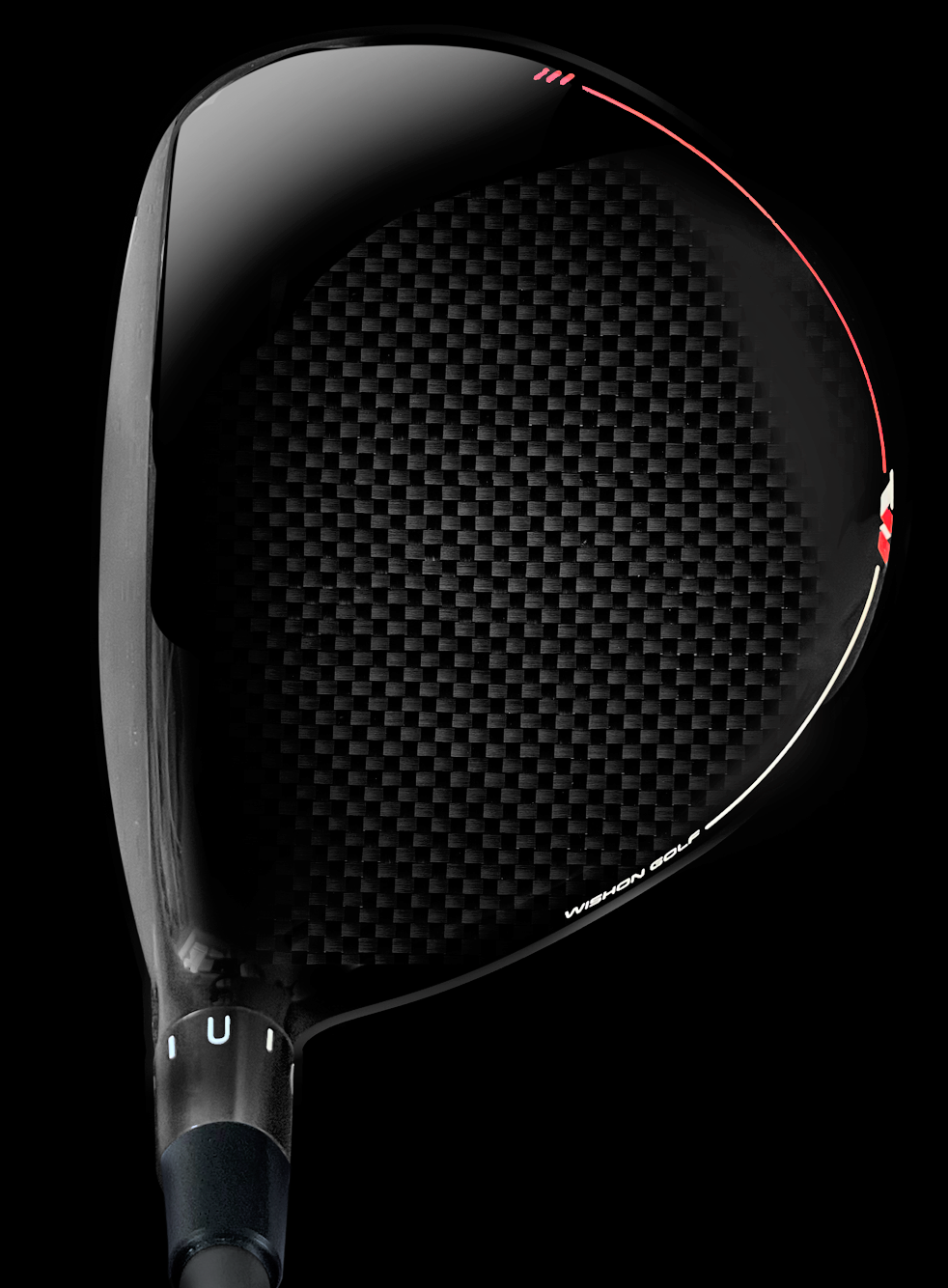
With the 719MW adjustable driver SOLED in the address position, the hosel sleeve will allow a change in face angle from 2° closed to 3° open or lie position from 57° to 61°.
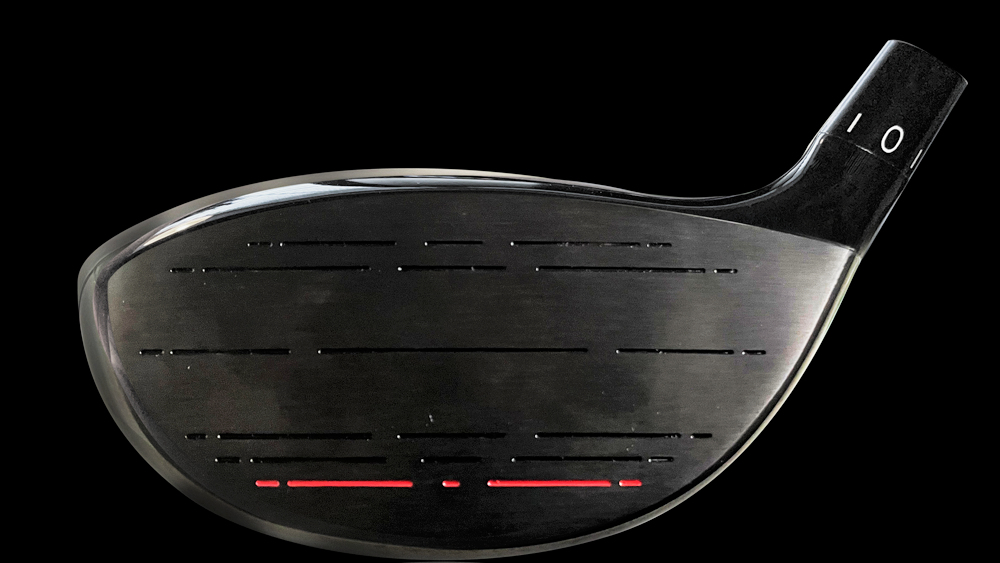
By holding the 719MW adjustable driver with the face square to the target in the address position, the hosel sleeve will allow a change in loft of the 719MW-9° model from 7.5° to 11°; For the 719MW-11° model, by holding the club with the face square to the target in the address position, the hosel sleeve will allow a change in loft from 9.5° to 13°. A printed sheet explaining each hosel setting and result will be included with each 719MW driver head.
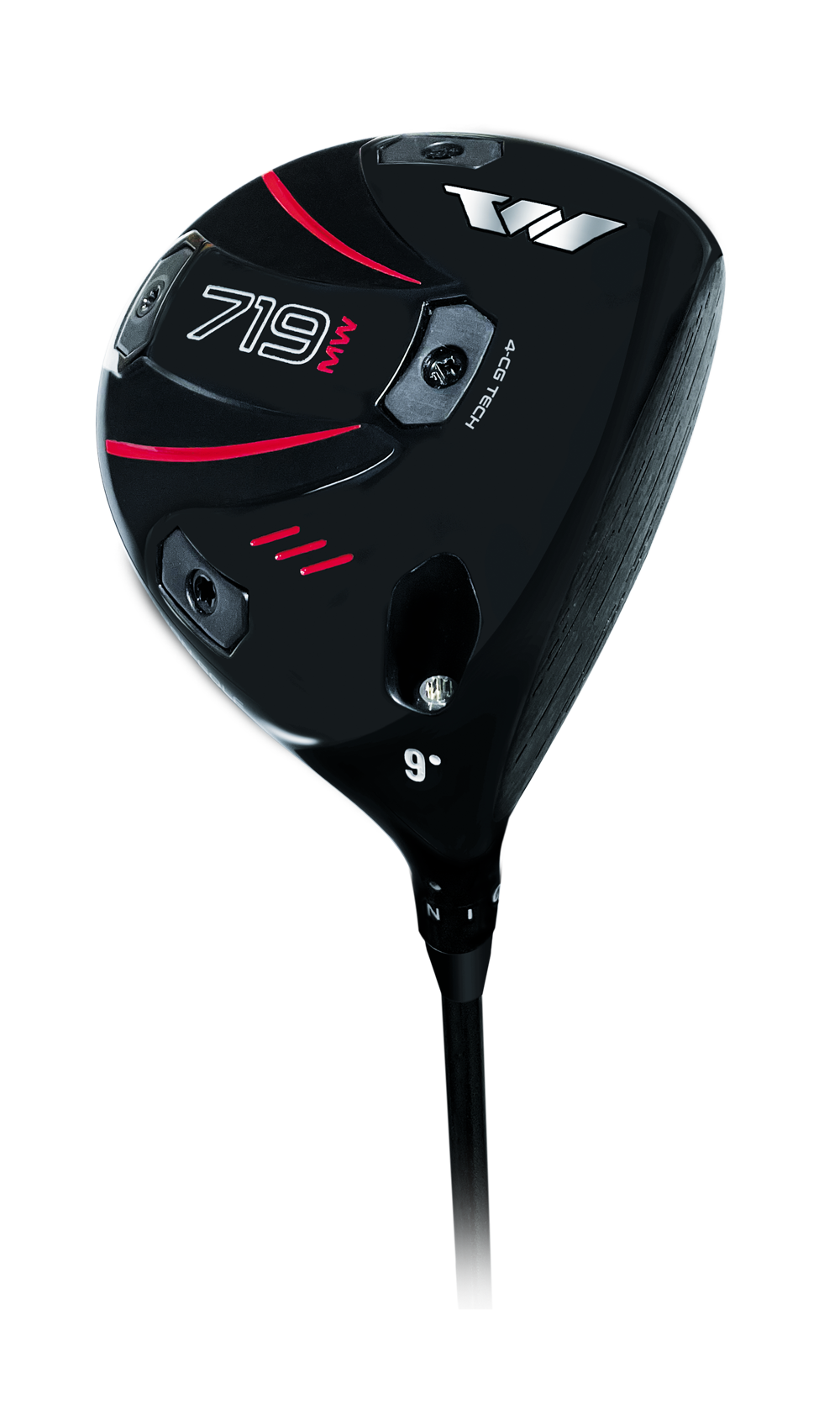
Use of two 10g weights, one in the toe and one in the heel side weight cavities, will increase the MOI by approximately 500g-cm2 to further enhance off centre hit performance.
WHERE DID THIS IDEA
COME FROM ???
 |
 |
 |
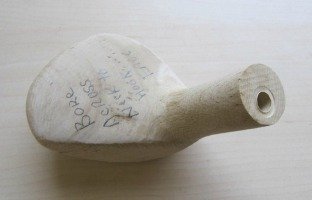 |
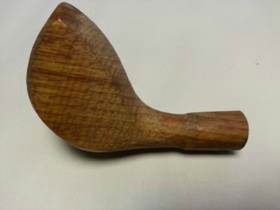
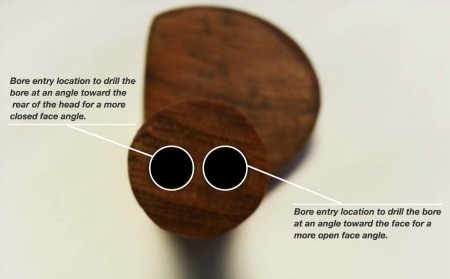
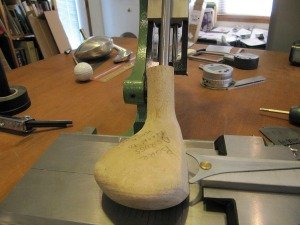
The origin for the manner in which the modern adjustable hosel devices are able to change woodhead specifications comes from the era of wooden head manufacturing. In the time when woodheads were made from trees, the lie angle and face angle of the woodhead were created by drilling the hosel bore into the neck of the raw wooden turning. If a different lie or face angle was required, the bore would be drilled at a different angle to the plane of the sole. The technique was referred to as "cross-boring the hosel".
What you cannot do through changing the angle of the bore into the head is to change the loft of the woodhead. In no way can the loft of a woodhead be changed by changing the angle of the shaft/bore into the head. To change loft on the wooden heads, raw turnings of different loft had to be made, or, skilled workers would carefully file the wooden face to increase or decrease the loft.
When the angle of the shaft/bore into the head was changed, the lie angle, the face angle or both together can be changed, but the loft cannot be changed, This is because when the head is placed on the specs measurement machine, the head is still positioned to sit on the major flat surface of the sole. A different lie angle certainly can be achieved, so too a different face angle. But no matter how you angle the shaft bore into the head, the static loft remains the same as it was on the original turning.
The adjustable hosel devices in use in the golf industry are all designed to work in the same manner as a change in the drilling of the bore angle in a wooden head. The hosel is designed larger in diameter to accommodate both the shaft and the adjustable device. The adjustable hosel device in which the shaft is inserted is designed so its bore is at an angle to the outside of the device. Thus when the entire device with shaft installed is rotated, the angle of the shaft is changed with respect to the ground line of the sole plane from face to back - similar to how the bore is drilled at an angle in a wooden head to achieve a different lie and face angle. How much this angle of the shaft in the adjustable hosel device can be altered depends on how large the hosel is made so as to be able to accommodate a greater off bore angle in the adjustable device.
WHAT ABOUT THE SHAFT SPLINE????
I haven’t even touched on what all this rotating the shaft into all its different positions does to the spline of the shaft. Each new position obviously changes the dispersement of the shot due to the shaft, and we have found that it changes the flex and overall performance of the shaft. For a refresher on what puring the shaft does: